The Architecture of Thought: Beyond Biological Constraints
\n\n
Most leaders view their cognitive capacity as a fixed asset—a finite resource that either succeeds or fails based on innate talent or experience. This is a strategic error. By treating the mind as a static entity, executives ignore the potential for artificial neural mapping to augment, clarify, and extend human decision-making. We are moving toward a period where the barrier between biological intuition and synthetic data processing dissolves, fundamentally altering how we define operational excellence.
\n\n
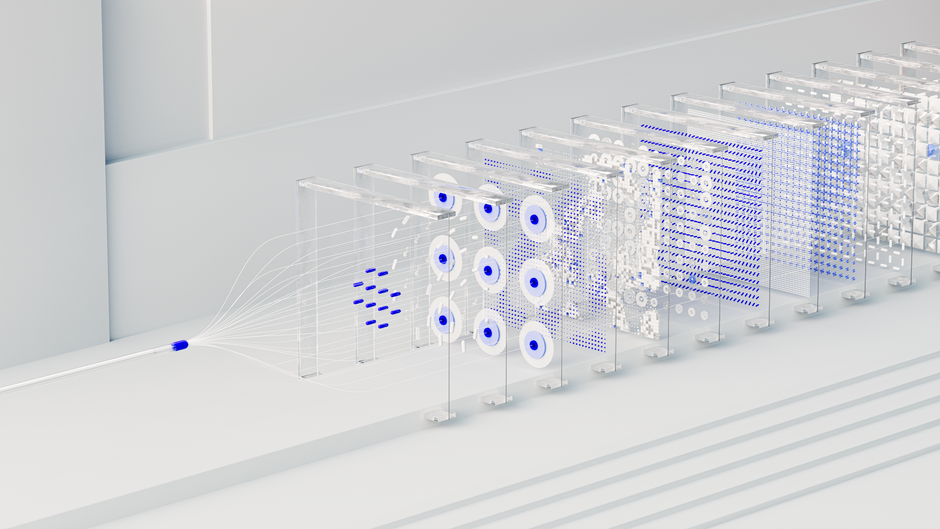
Artificial neural mapping refers to the process of simulating the complex, interconnected pathways of human cognitive patterns within digital frameworks. Unlike basic machine learning, which focuses on pattern recognition, neural mapping attempts to replicate the architecture of decision-making itself. For the high-performance leader, this represents an opportunity to offload cognitive load, stress-test mental models, and refine the decision-making process before a single resource is committed to the field.
\n\n
Decoding the Neural Topology of Strategy
\n\n
Strategy is essentially the art of mapping high-stakes outcomes against unpredictable variables. Humans are prone to cognitive biases—anchoring, confirmation bias, and the sunk-cost fallacy—that warp our internal maps. Artificial neural mapping allows for a simulation of these biases within a sandbox environment. When we map a strategy against a synthetic neural net, we aren’t just looking for data gaps; we are looking for architectural failures in our logic.
\n\n
Consider the leadership challenge of scaling an organization. A traditional leader relies on past successes, which are often poor predictors of future market shifts. By utilizing neural mapping to simulate organizational responses to specific stressors, leaders can identify the exact points where communication breaks down or where execution velocity stalls. This isn’t just data analysis; it is the simulation of an organization’s nervous system.
\n\n
The Mechanics of High-Performance Cognition
\n\n
To implement this, you must shift your perspective on how information flows through your enterprise. Treat your organization as a neural network. Information acts as the electrical impulse; departments act as the nodes; and operational excellence is the efficiency with which those impulses result in actionable outputs.
\n\n
\n
Node Identification: Map the critical decision-makers in your organization. Who holds the context? Who holds the authority?
\n
Latency Audits: Identify where information slows down. Often, the bottleneck is not a lack of data but an excess of hierarchical noise.
\n
Synthetic Stress-Testing: Before launching a major initiative, run a simulation that forces your decision-making structure to account for worst-case scenarios, effectively \”mapping\” how the organization reacts under duress.
\n
\n\n
The Future of Executive Leverage
\n\n
The true power of AI in the executive suite is not in automation—it is in the expansion of cognitive reach. When you integrate artificial neural mapping into your strategy, you are essentially creating a digital twin of your own mental framework. This allows you to test hypotheses at a speed that biological cognition cannot match.
\n\n
The goal is not to outsource thought to a machine, but to use machine mapping to expose the blind spots in your own thinking. High-performance leaders have always sought mentors or peer groups to challenge their logic. Today, neural mapping provides a more objective, data-rich mirror. It challenges your assumptions without the social friction that often accompanies boardroom debates.
\n\n
Execution Through Clarity
\n\n
Complexity is the enemy of execution. When you map your neural processes—or the processes of your team—you strip away the ambiguity that leads to half-measures and stalled projects. By clearly defining the causal pathways between an executive decision and a market outcome, you increase the probability of success exponentially.
\n\n
Stop viewing your leadership style as an abstract quality. Start treating it as a map that can be refined, updated, and optimized. Those who master the ability to integrate synthetic neural insights into their daily operations will set the pace for their industries, while others remain trapped in the limitations of traditional, linear thinking.